
Electrical
Electrical distribution runs on two kinds of demand.
Recurring replenishment keeps the lights on. Project orders drive the revenue spikes. Most ERPs can’t tell the difference and that’s where planning breaks down. Blue Ridge handles both.

"For years I thought of an item as one SKU. Blue Ridge made me realize it's actually eight SKUs, each with its own behavior. That was a big leap."

THE PROBLEM WE’RE SOLVING
When your ERP can't distinguish a project from a pattern
Steady replenishment and project-based demand spikes don’t follow the same rules. Static min/max treats them as if they do, and the result is dead stock accumulating while the right components are out of stock elsewhere.

Separate project demand from your baseline
Blue Ridge isolates project spikes from your replenishment baseline so everyday contractor and MRO demand drives accurate stocking decisions at every location.

Turn dead stock into working capital
Blue Ridge surfaces non-moving inventory across locations for action, turning dead stock into a recovery opportunity, not a year-end write-off.

Reclaim hours lost to manual review
Replace daily manual order review with exception-based purchasing. Blue Ridge surfaces only what needs attention, freeing buyers to focus on decisions that matter.
WHO WE SERVE
Built for every person in electrical distribution
From the VP watching dead stock accumulate across branches to the buyer working through min/max orders every morning, Blue Ridge gives every role the tools to plan smarter and measure the results.

Supply chain & operations leadership
Get visibility across every branch and replace gut-based purchasing with a planning process where service levels, dead stock, and GMROI are measurable.

Demand planners & buyers
Dead stock is capital sitting idle across your locations. Blue Ridge optimizes your inventory investment and gives leadership the metrics to measure it.

CFOs & executive leadership
Inventory tied up in dead stock can’t fund growth. Blue Ridge turns your inventory investment into a measurable performance lever.
What Sets Us Apart
Why electrical distributors choose Blue Ridge
Electrical distribution is more complex than what ERPs or spreadsheets can account for, featuring mixed demand profiles, multi-branch networks, and commodity purchasing decisions. Blue Ridge is purpose-built for these complexities.
Explainable forecasting
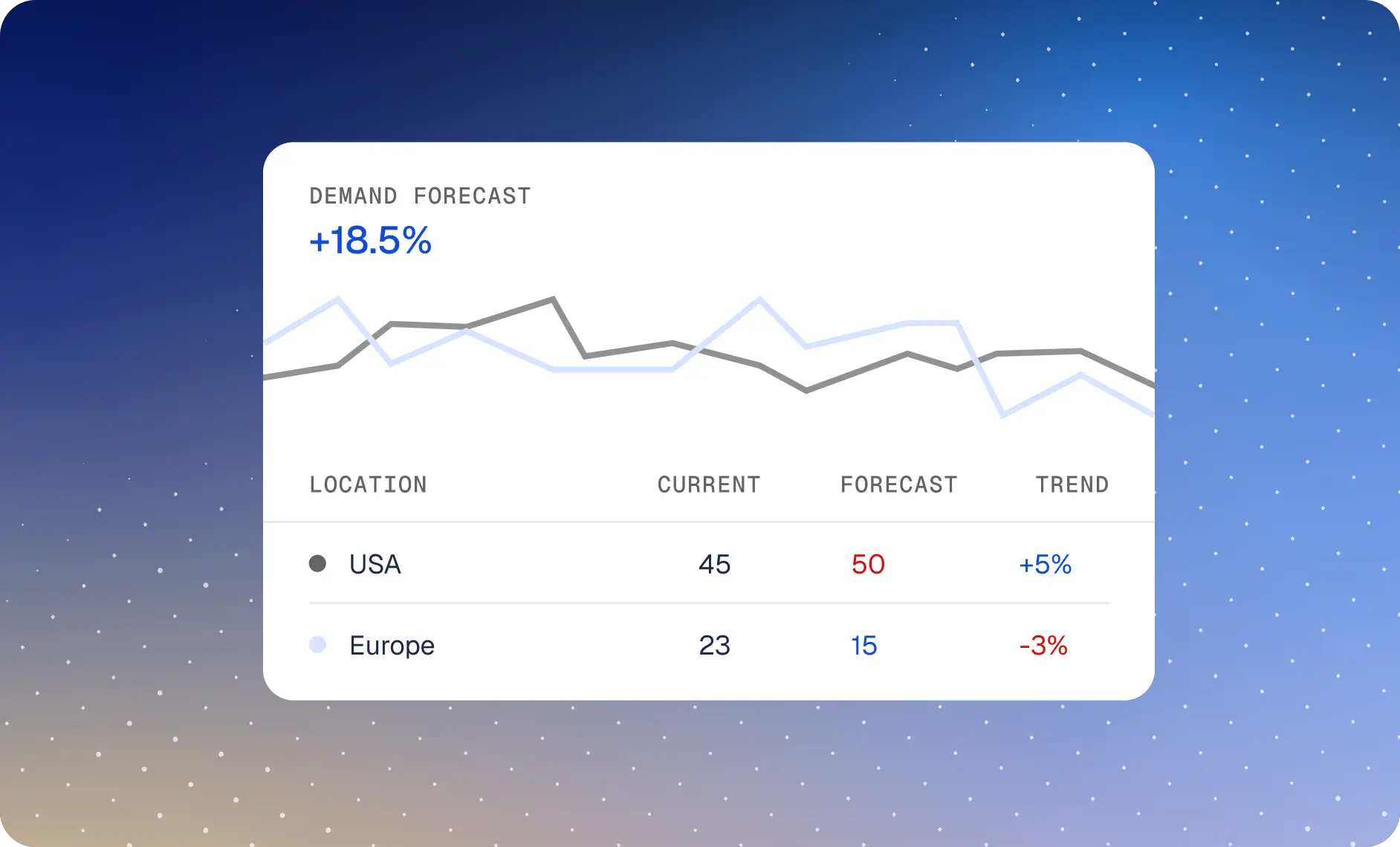
Dynamic forecasting distinguishes project spikes from recurring demand and adjusts forecasts per product and by location, so replenishment reflects actual behavior, not historical noise.
Multi-branch optimization across the network
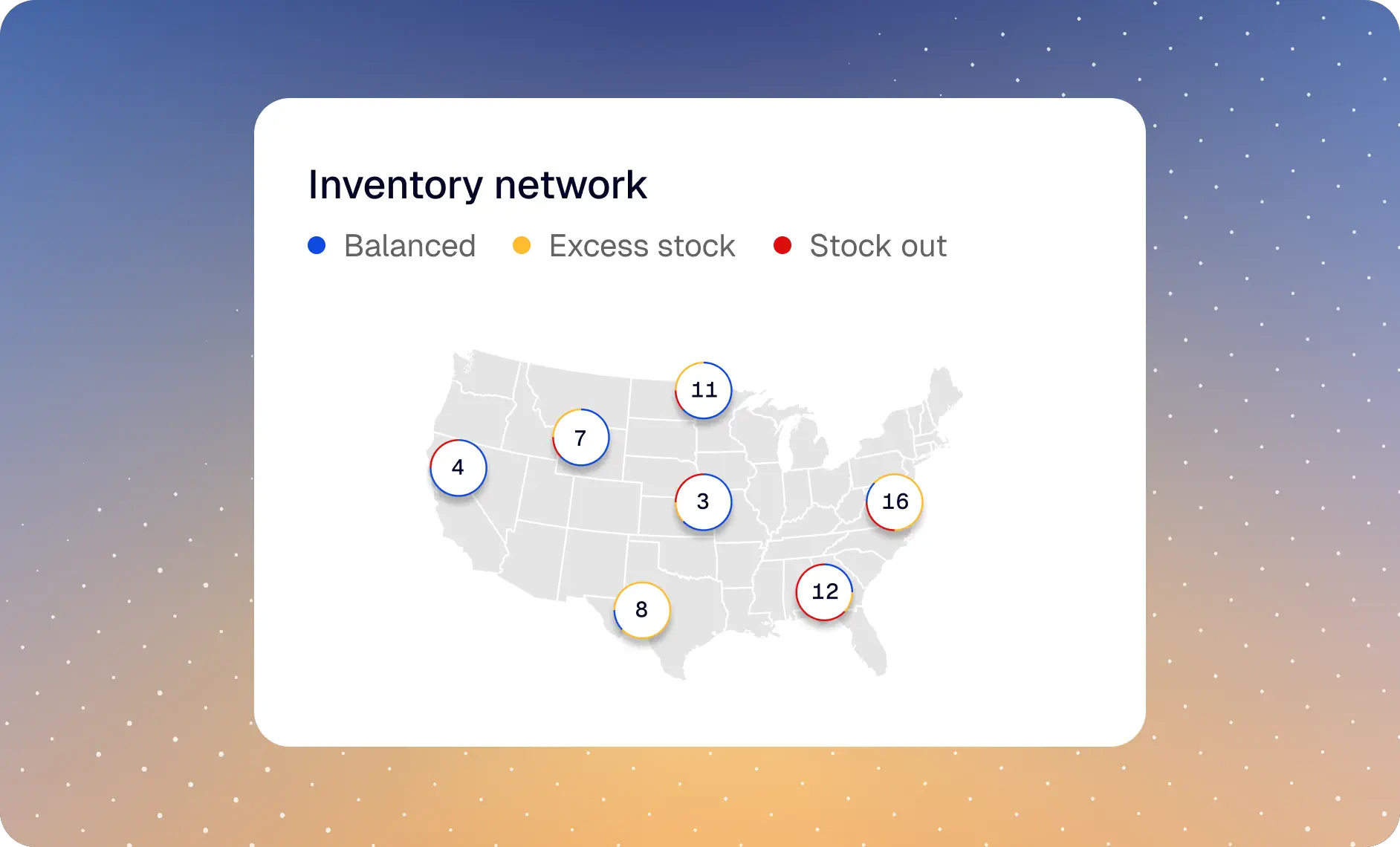
Blue Ridge optimizes stocking decisions across every location, identifying imbalances and ensuring the right components are in the right place before demand arrives.
A partner with proven results
The Strategic Success Practice embeds industry expertise into every relationship with proven results: dead stock down 70–80%, service levels above 96%.

FAQS
Your questions, answered
Can’t find what you’re looking for? Reach out to our team and we'll get you the answers you need.
Electrical distributors manage two fundamentally different demand types simultaneously: recurring MRO and contractor replenishment, which is velocity-driven and forecastable, and project-based demand tied to industrial installations and construction jobs, which is lump-sum and triggered by job wins rather than consumption history.
Most planning tools treat all demand as if it follows the same rules. When project spikes are mixed into the replenishment baseline, historical data becomes distorted and inflates future forecasts, drives unnecessary safety stock, and produces dead stock across branch networks.
The most effective approach isolates project-based demand from the recurring replenishment baseline so that large job orders don't distort future forecasts for everyday contractor and MRO demand. Replenishment can then be phased to align with job timelines rather than buying all components upfront, reducing the risk of tying up capital in inventory weeks before the work requires it.
For the recurring replenishment portion of the business, exception-based planning handles the volume problem by automating routine decisions and surfacing only the items that actually need buyer attention.
The combination of a wide product catalog, project-driven demand spikes, and static min/max safety stock policies produces chronic dead stock in most electrical distribution operations. Static rules treat a product that spiked because of a one-time job the same as one with genuine recurring demand, and the result is inventory sitting in branches long after the project that drove the purchase is complete.
Multi-branch operations compound the problem. Without network-level visibility, inventory concentrates in the wrong locations with excess in some places and stockouts in others with no systematic mechanism to identify or act on the imbalance.
Look for a platform that handles the dual demand profile of electrical distribution by separating project-based demand from recurring replenishment so each is planned with the appropriate method. Multi-location network optimization is equally important: inventory should be coordinated across every branch simultaneously, not optimized one location at a time.
Key capabilities include dynamic forecasting for mixed demand patterns, dead stock identification, exception-based buying that replaces daily manual order review, dynamic lead time forecasting, and KPI reporting on service levels, dead stock, and GMROI. These are capabilities that ERP systems common in this space, such as Eclipse and Profit 21, typically do not provide natively.
Blue Ridge identifies slow-moving and non-moving inventory across every location systematically, surfacing it for action before it becomes a year-end write-off. Demand-driven replenishment then replaces the static min/max rules that created the dead stock, calibrating order quantities to actual demand behavior at the product and location level.
For multi-location networks, Blue Ridge optimizes stocking decisions across every location simultaneously, identifying imbalances, coordinating transfers where they make economic sense, and ensuring the right components are in the right branch before a contractor or industrial account needs them.
Blue Ridge models the entire branch network as a connected system rather than a collection of independent locations. Stocking decisions at each branch are informed by network-wide demand patterns, so inventory isn't duplicated unnecessarily and shortfalls in one location can be anticipated before they require an emergency transfer.
When demand shifts at one location because of a new project in the area, a change in contractor mix, or a product substitution, inventory requirements across the network adjust automatically. West Virginia Electric Supply achieved dead stock reductions of 70–80%, service levels of 96.3%, and cut buying time approximately in half after making this shift.
Customer Stories
Hear from the businesses making every decision count
"Blue Ridge has the best interface and analytics you would need as a professional purchasing buyer"
Thelma Chavez
Director of Operations
Jackson Systems is a six-division HVAC distributor generating roughly $40M in annual revenue. Before Blue Ridge, the planning team reviewed every SKU manually – a process measured in days, not hours. Exception-based planning compressed that work, freed cash from excess stock, and pushed service levels into a range the team had never sustained before.
~$1M
Drop in inventory on hand
98.1%
Service level, up from 88%

“The goal wasn't just to reduce inventory. It was to have what we need, when we need it. That's exactly what Blue Ridge helped us do.”
David Mays
VP of Operations
West Virginia Electric Supply is an electrical distributor running eight branches on the Eclipse ERP. Centralizing inventory and moving to data-led replenishment let the team strip out the dead stock that had quietly accumulated for years – while service to contractors and customers held above 96% and the planning organization shifted from firefighting to forward-looking decisions.
70–80%
Reduction in dead stock
96.3%
Service level to contractors and customers
“Blue Ridge has been the most user-friendly, results-driven system that I've seen so far. Our whole planning and buying team absolutely loves it.”
Stephanie Hunn
Senior Manager, Planning
Before Blue Ridge, ISN was struggling to optimize fill rate and inventory turns simultaneously. The team evaluated multiple vendors and chose Blue Ridge for the onboarding, training, and ongoing system improvements baked into the relationship. They went live and saw measurable results from the first operating cycle forward – with the Strategic Success Practice supporting every step.
~99%
Forecast accuracy maintained
50%
Improvement in fill rates over twelve months
“The ERP handles transactions. Blue Ridge handles the intelligence. That's the difference.”
Brad Smith
SVP, Procurement & Sales
Southwest Traders supplies national restaurant chains – Panera, Einstein, Starbucks, Panda Express – from a buying team of nine to eleven working on an AS/400 ERP. Blue Ridge cut order-build time from days to a few hours, held service levels at 99.95% across blue-chip customers, and let the company onboard new brands without adding to the planning team.
99.95%
Service level across national restaurant brands
~18.5
Days on hand