
AI Innovation
AI built for supply chain. Not adapted for it.
Blue Ridge has been applying AI to supply chain decisions since before it was a trend. The result is a platform where intelligence isn't a feature. It's the foundation every forecast, recommendation, and decision is built on.

AI Heritage
Two Decades of AI‑Led Decisions
Blue Ridge didn't add AI to a planning platform. It built a planning platform infused with AI at its core, compounding domain expertise and real-world validation into intelligence that gets smarter with every cycle.

2007
Founded on machine learning-driven forecasting at a time when most supply chain planning ran on static rules and spreadsheets.

2025
Blu, our conversational AI, enters production, giving planners plain-language access to forecasting and replenishment intelligence across the full planning stack.

2026
A fully AI-native platform architecture launches, with Adaptive ML forecasting, Agentic AI, and a cloud-native data foundation purpose-built for supply chain intelligence at enterprise scale.
Core Pillars
Why supply chain AI needs more than a good model
General-purpose AI adapts to supply chain. Enterprise platforms bolt AI on. AI-native startups build fast and run shallow. Blue Ridge built its AI from the ground up, on a data foundation shaped by nearly two decades of distribution complexity.
AI built on data, not applied to it
Blue Ridge derives its own operational intelligence from raw ERP data before AI ever touches it, producing decision-grade inputs that generic AI cannot replicate.

Domain depth that cannot be prompted into existence
Nearly two decades of distribution logic, including edge cases, supplier constraints, and seasonal complexity, is encoded in the platform. AI can prototype around it. It cannot replace it.

Explainable by design
Every forecast decomposed into the signals driving it, accurate and fully explainable. No black box, no trade-off between the two.

Autonomy granted, not assumed
Every agent's authority is granted through demonstrated accuracy, and withdrawn automatically the moment performance degrades. That's governance built directly into the system.

Intelligence across the full planning stack
Adaptive ML, Generative AI, and Agentic AI operate on the same shared data foundation, so every forecast informs every replenishment decision, and every agent operates with the same intelligence the platform has been building for years.

A partner invested in what the AI delivers
The Strategic Success Practice ensures the platform's intelligence is realized by supply chain practitioners proactively monitoring outcomes and guiding strategy, so AI investment translates into measurable business results.
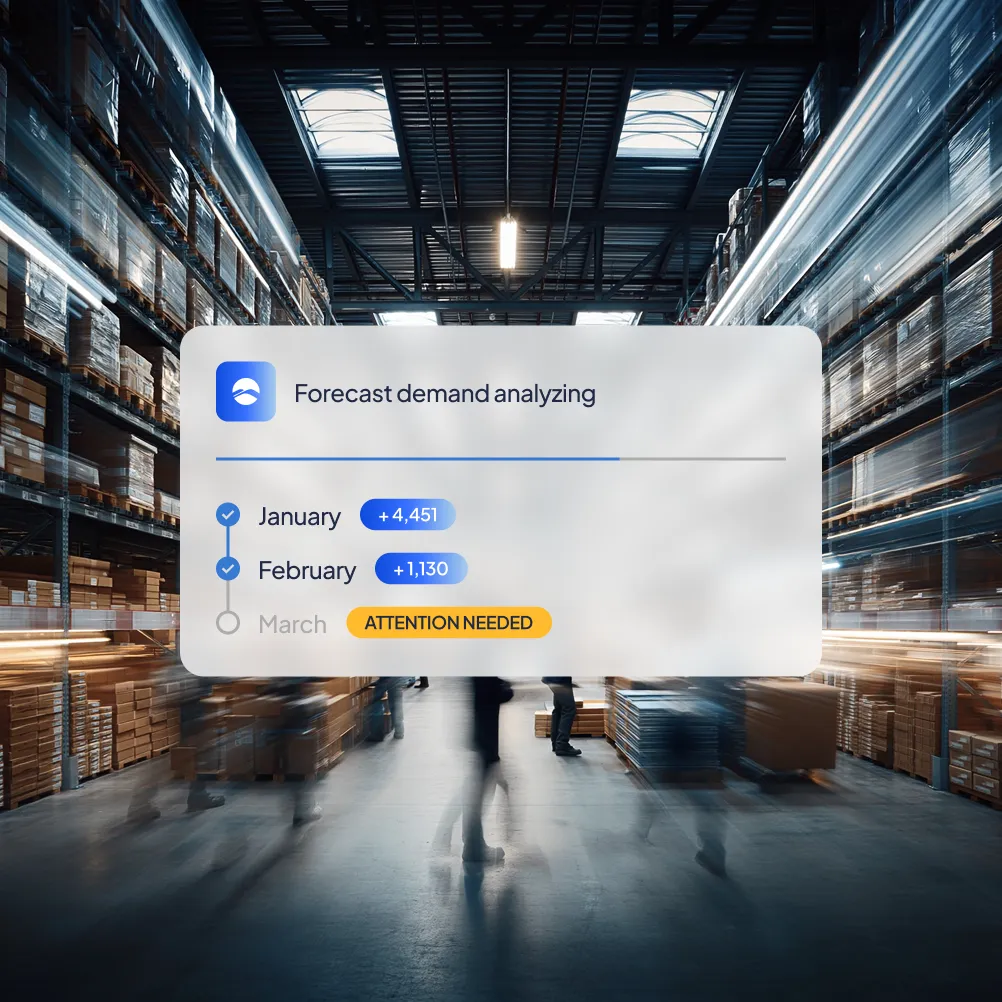
Blu GenAI
Meet Blu: AI that explains every decision it makes
Blu is Blue Ridge's Generative AI, not a chatbot bolted onto a dashboard, but an intelligence layer embedded in the planning workflow. It retrieves, reasons, and responds across demand and replenishment in a single prompt, with the reasoning always shown.

Platform
AI isn't a feature here. It's the architecture
From the data foundation to the forecasting engine to the conversational interface, AI runs through every layer of the Blue Ridge platform — not as an add-on, but as the structural reason Supply Chain Intelligence works the way it does.
Responsible AI
AI you can trust. Governed from the ground up
Blue Ridge's AI is built within enterprise-grade guardrails so your team benefits from supply chain intelligence without compromising the data security, auditability, and compliance standards your organization requires.
Your data stays within your boundaries
Blu operates within your environment's workflows and policies through controlled connections, no open public endpoints, configurable retention and logging aligned to your compliance requirements.
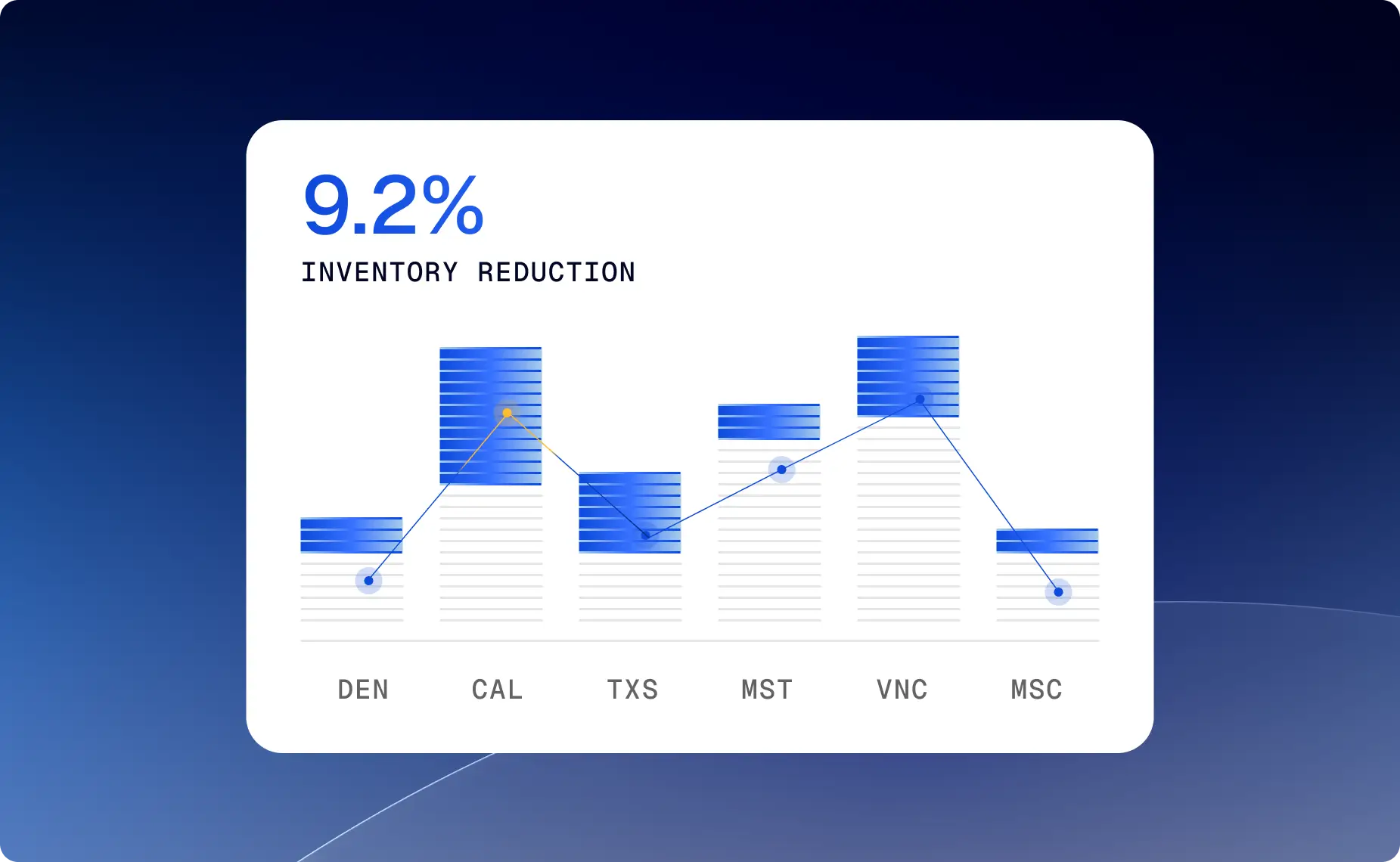
Every decision leaves an audit trail
All Blu interactions are logged with full prompt and response history, user attribution, and access records, consistent with Blue Ridge's SOC 2 Type II control framework and auditable on demand.
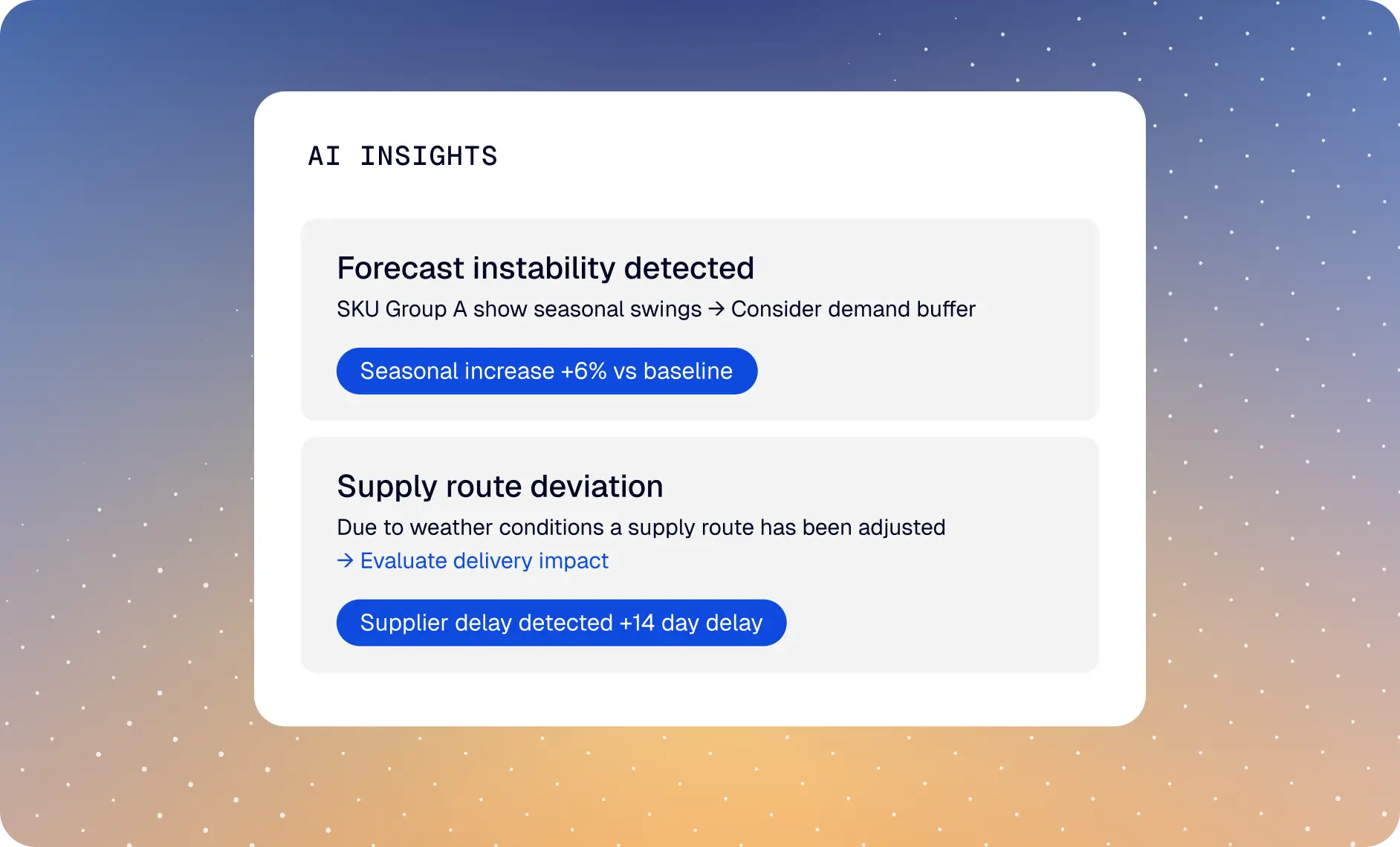
Enterprise-grade security, built in
Blu is built on AWS and Amazon Bedrock, with identity and access controls, encryption, and monitoring inherited from the same infrastructure large organizations use for regulated workloads

FAQS
Your questions, answered
Can’t find what you’re looking for? Reach out to our team and we'll get you the answers you need.
AI improves supply chain planning by identifying demand patterns across millions of product-location combinations simultaneously, incorporating external signals like weather, promotions, and economic indicators that traditional planning tools miss. It also automates routine decisions, surfaces exceptions that need human judgment, and self-corrects as conditions change, so planning stays accurate between cycles rather than going stale.
Explainable AI means every forecast or recommendation comes with a visible breakdown of the factors driving it: trend, seasonality, promotions, price, weather, and calendar events. Rather than accepting a black-box output, planners can see exactly why a forecast moved, adjust inputs they disagree with, and act on recommendations with confidence. Explainability is what makes AI practical for planning teams who need to defend every decision.
General purpose AI is trained on broad datasets and adapted for specific use cases after the fact. Supply chain AI is built from the ground up on operational data: ERP transactions, order history, supplier lead times, and demand signals specific to distribution and manufacturing. The difference shows up in accuracy, relevance, and the depth of domain knowledge encoded in the recommendations the platform makes.
Look for explainability: can planners see why the AI made a recommendation? Look for domain depth: is the AI trained on supply chain data specifically, or adapted from a general model? Look for governance: are AI decisions auditable and logged? And look for a track record: has the platform been applying AI to real supply chain decisions for years, not months?
Blue Ridge includes three distinct AI capabilities operating on a shared data foundation. Adaptive Machine Learning powers the forecasting engine, producing probabilistic forecasts that incorporate external signals and improve with every cycle. Blu, the generative AI layer, answers questions and explains recommendations across the platform in plain language. Agentic AI monitors the operation continuously, detects disruption patterns, and acts within an authority that is granted through demonstrated accuracy and withdrawn automatically if performance degrades.
Blue Ridge was founded in 2007 on machine learning-driven forecasting, at a time when most supply chain planning ran on static rules and spreadsheets. That means nearly two decades of real-world validation, domain expertise, and compounding intelligence built into the platform. The 2026 platform architecture extends that foundation with Adaptive ML, Generative AI, and Agentic AI operating on a cloud-native data foundation purpose-built for supply chain intelligence at enterprise scale.