
Customer Story
How Southwest Traders Cut Inventory Days by 10 and Reached 99.95% Service Levels

Overview
Southwest Traders, a foodservice distributor supplying national restaurant chains, has partnered with Blue Ridge since 2018 to move its buying team off manual, line-by-line purchase orders. The result: days on hand down from the high 20s to 18.5, aged inventory down from 16% to 2%, and service levels up from 97.2% to 99.95%, all while the company nearly doubled in size.
Industry
Food & Beverage
Solutions
Demand Planning
Replenishment
Strategic Success Practice
Challenges
Buyers built every purchase order by hand, one item at a time, all week long.
Buyers created purchase orders inside an AS/400-based ERP from Mark Information Systems. The system stored historical usage but offered no forecasting and no guidance, so a buyer had to click into each item and type a number. As Brad Smith, SVP of Procurement & Sales, put it, “You would literally just sit there going through screens one at a time. That’s all they did all week – build purchase orders.”
Every SKU, every week, thousands of them. With nine to eleven buyers on staff, purchase order creation filled the entire week. A different group then confirmed each order, and the warehouse tracked it. No one had time for analysis, strategy, or planning.
Service levels near 97% still cost Southwest Traders a major restaurant contract.
Service levels hovered around 97.2%, a number that did not sound terrible until repeated stockouts of core products cost Southwest Traders a contract with a large fast casual restaurant.
Days on hand in the high 20s and 16% aged inventory strained working capital.
Days on hand (DOH) regularly sat in the high 20s and climbed higher during busy seasons. Aged inventory reached 16%, tying up cash and taking up space. Southwest Traders even rented whole trailers just to store slow movers.
Onboarding 78 new suppliers for Panera Bread would have overwhelmed the existing process.
Then came Panera Bread. Supporting the new business meant onboarding 78 new suppliers, and leadership budgeted one additional buyer. Brad knew right away that the math did not work: the existing process was already exhausting the team, and growth would only magnify the problem.
Challenge 01
Manual, line-by-line purchase orders
Challenge 02
Service gaps that cost a contract
Challenge 03
Excess inventory tying up cash
Challenge 04
Growth outpacing buying capacity
Solutions
Forecast-driven, exception-based buying that turned a week of purchase orders into a Monday routine
Blue Ridge Demand Planning and Replenishment generate forecast-based order recommendations, so buyers no longer key in quantities item by item.
Buyers created purchase orders inside an AS/400-based ERP from Mark Information Systems. The system stored historical usage but offered no forecasting and no guidance, so a buyer had to click into each item and type a number. As Brad Smith, SVP of Procurement & Sales, put it, “You would literally just sit there going through screens one at a time. That’s all they did all week – build purchase orders.”
Every SKU, every week, thousands of them. With nine to eleven buyers on staff, purchase order creation filled the entire week. A different group then confirmed each order, and the warehouse tracked it. No one had time for analysis, strategy, or planning.
Each Monday, buyers clear demand exceptions and check due-for-service items. For many vendors, orders can be approved without touching a single line.
Service levels hovered around 97.2%, a number that did not sound terrible until repeated stockouts of core products cost Southwest Traders a contract with a large fast casual restaurant.
The team reconciled mismatches between the ERP and Blue Ridge, correcting item profiles, vendors, order cycles, and history so recommendations could be trusted.
Days on hand (DOH) regularly sat in the high 20s and climbed higher during busy seasons. Aged inventory reached 16%, tying up cash and taking up space. Southwest Traders even rented whole trailers just to store slow movers.
A dedicated Blue Ridge power user and an assigned Strategic Success Consultant worked side by side with buyers until the new process was stable.
Then came Panera Bread. Supporting the new business meant onboarding 78 new suppliers, and leadership budgeted one additional buyer. Brad knew right away that the math did not work: the existing process was already exhausting the team, and growth would only magnify the problem.
Solution 01
Forecasting and automated replenishment
Solution 02
Exception-based buying
Solution 03
Clean item profiles and vendor policies
Solution 04
Hands-on Strategic Success Practice support
Results
99.95% service levels, 10 fewer days on hand, and growth without adding buyers

99.95%
Service level, up from 97.2%
18.5
Days on hand, down from the high 20s
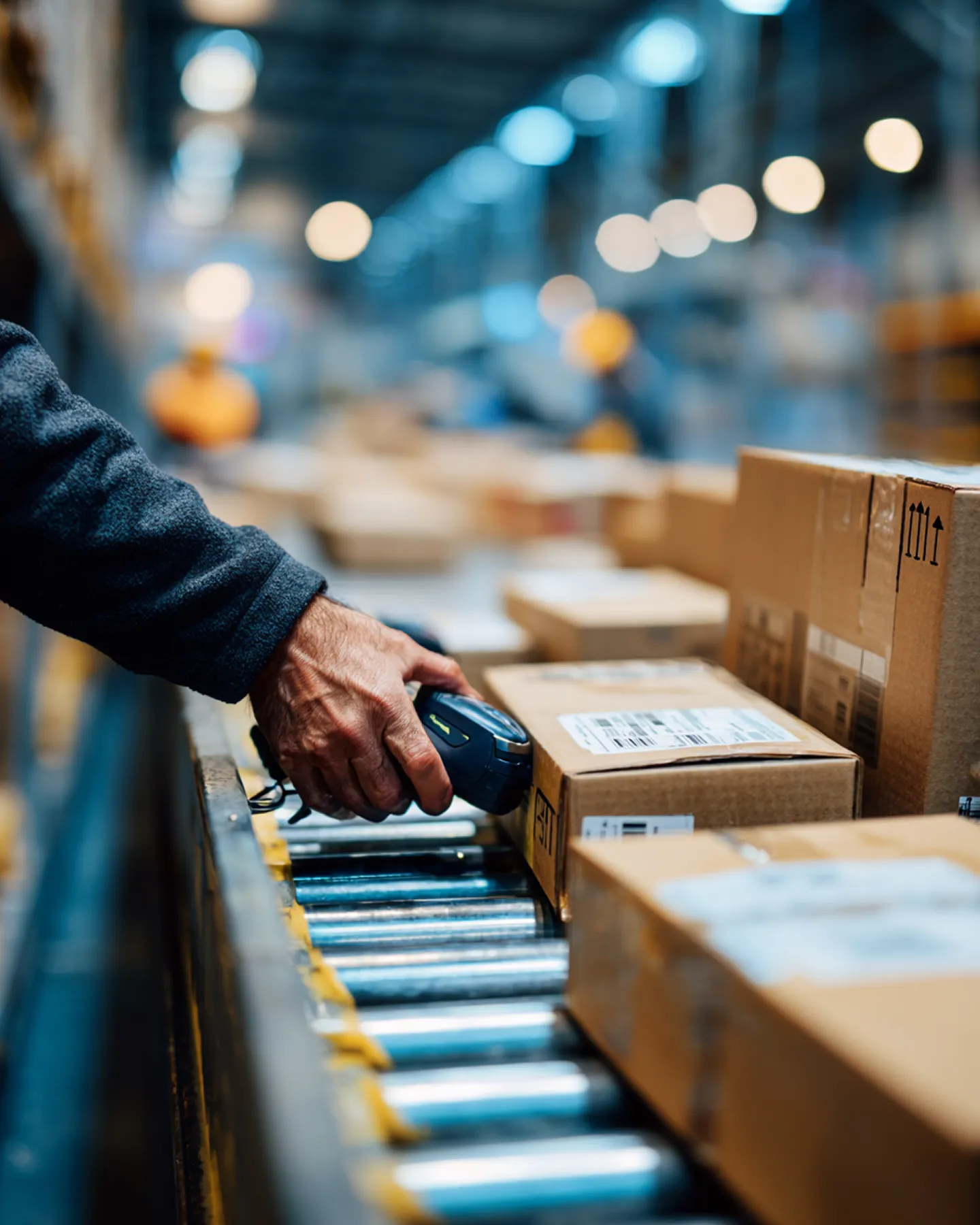
Monday became buying day. Buyers clear demand exceptions and check due-for-service items, and they finish in three or four hours, sometimes two. That work used to fill the entire week. With replenishment largely automated, buyers took on work that once sat in other departments: running RFPs for categories like cups and packaging, sourcing better pricing and terms, tracking their own purchase orders and inbound shipments, and supporting sales without getting buried in follow-up. They stopped being people who place orders and became true category managers. The company nearly doubled in size while the buying team went from nine to eleven buyers to four.
The impact reached well beyond procurement. Inbound loads became steady and predictable, storage trailers were no longer needed, and spoilage dropped dramatically. Days on hand fell from the high 20s to about 18.5, which ended the need to use the credit line to fund excess inventory. Aged inventory fell from 16% to 2%, one of the lowest percentages Brad had ever seen.
For customers, the difference is simple: the product is there when they need it. Service levels rose from 97.2% to 99.95%, and that consistency changed customer conversations. References from Panera Bread, Starbucks, Einstein, and others helped Southwest Traders win Panda Express without adding buying headcount.
“We’re launching Panda Express right now and I’m not adding a buyer. Our service level with Panera, Einstein, Starbucks, all those brands, is 99.95%. They talk to each other. That’s how we got Panda.”
Brad Smith
SVP of Procurement & Sales

The turning point: a partner who had lived the problem
Blue Ridge was not on Brad’s radar at first. He explored other options, but the functionality was not strong enough or the vendors lacked meaningful customer bases. Then a new executive who had used Blue Ridge before encouraged him to take a look. The turning point came quickly, when Blue Ridge sent a Strategic Success Consultant who was a former procurement manager. He had done Brad’s job, knew the problems intimately, and could show exactly how the platform addressed them. “I wasn’t talking to someone guessing about my problems. He had lived them,” Brad says.
Implementation followed the same principle. The team had prepared its data thoroughly, yet connecting systems surfaced mismatches between the ERP and Blue Ridge, and cleaning up item profiles, vendors, order cycles, and history took time. On his CIO’s advice not to do it alone, Brad brought a dedicated Blue Ridge power user onto the team full-time. Buyers, the power user, and the assigned Strategic Success Consultant worked side by side in one large conference room until everything was stable. It was more than data cleanup. It was a cultural reset that shaped the team’s work for years.
Looking Ahead
From keeping pace with growth to a foundation for more of it

“If we ever changed ERP systems, I’d fight hard to keep Blue Ridge. The ERP handles transactions. Blue Ridge handles the intelligence. That’s the difference.”
Southwest Traders has been on Blue Ridge since 2018. The metrics have held and, in many areas, improved as more data accumulated and buyers learned to get the most from the platform. Blue Ridge is a core part of the supply chain operation, and the Strategic Success Consultant brings proactive recommendations rather than reactive troubleshooting, which Brad values.
The team plans to move to the next generation of the Blue Ridge platform. Brad expects more automation in the years ahead, especially auto-approved orders for consistent, predictable items, and sees Blue Ridge as essential to that path.
Southwest Traders did not just replace a system. It replaced a way of working. The move from manual purchase order creation to an exception-driven planning process changed the role of buyers, stabilized inventory, cleared warehouse congestion, and brought service levels to a point where customers now recommend the company to others. What began as a way to keep up with growth became a foundation for supporting even more of it.
Customer Stories
Hear from the businesses making every decision count
“The ERP handles transactions. Blue Ridge handles the intelligence. That's the difference.”
Brad Smith
SVP, Procurement & Sales
Southwest Traders supplies national restaurant chains – Panera, Einstein, Starbucks, Panda Express – from a buying team of nine to eleven working on an AS/400 ERP. Blue Ridge cut order-build time from days to a few hours, held service levels at 99.95% across blue-chip customers, and let the company onboard new brands without adding to the planning team.
99.95%
Service level across national restaurant brands
~18.5
Days on hand

“Blue Ridge has been the most user-friendly, results-driven system that I've seen so far. Our whole planning and buying team absolutely loves it.”
Stephanie Hunn
Senior Manager, Planning
Before Blue Ridge, ISN was struggling to optimize fill rate and inventory turns simultaneously. The team evaluated multiple vendors and chose Blue Ridge for the onboarding, training, and ongoing system improvements baked into the relationship. They went live and saw measurable results from the first operating cycle forward – with the Strategic Success Practice supporting every step.
~99%
Forecast accuracy maintained
50%
Improvement in fill rates over twelve months
“The goal wasn't just to reduce inventory. It was to have what we need, when we need it. That's exactly what Blue Ridge helped us do.”
David Mays
VP of Operations
West Virginia Electric Supply is an electrical distributor running eight branches on the Eclipse ERP. Centralizing inventory and moving to data-led replenishment let the team strip out the dead stock that had quietly accumulated for years – while service to contractors and customers held above 96% and the planning organization shifted from firefighting to forward-looking decisions.
70–80%
Reduction in dead stock
96.3%
Service level to contractors and customers
"Blue Ridge has the best interface and analytics you would need as a professional purchasing buyer"
Thelma Chavez
Director of Operations
Jackson Systems is a six-division HVAC distributor generating roughly $40M in annual revenue. Before Blue Ridge, the planning team reviewed every SKU manually – a process measured in days, not hours. Exception-based planning compressed that work, freed cash from excess stock, and pushed service levels into a range the team had never sustained before.
~$1M
Drop in inventory on hand
98.1%
Service level, up from 88%

Get Started
Build a supply chain that's ready for what's next
It’s never been easier to close the gap between your supply chain investment and your supply chain performance. Let us show you how.